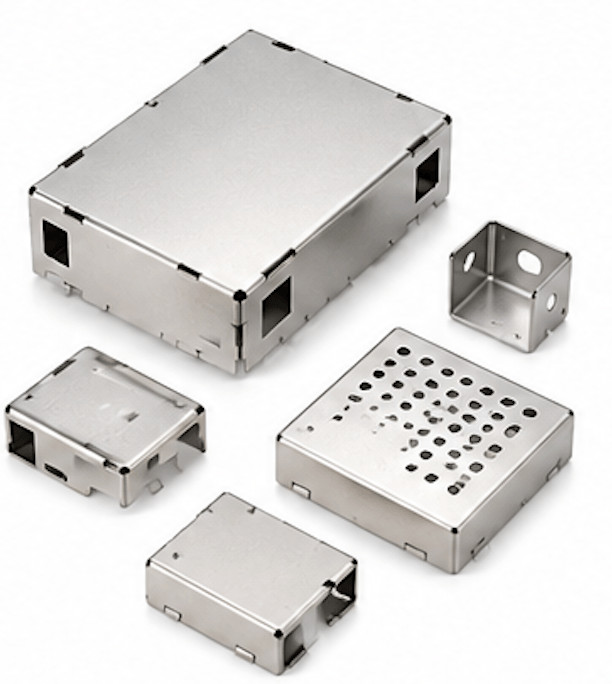
The top 5 metal stamping companies in the USA for 2025 are Cleveland-Cliffs Tooling and Stamping, Wiegel Manufacturing, Trans-Matic, RCO Engineering, and US Metal Crafters. This isn’t a generic list. I sorted these by volume-band fit, from prototype runs under 10K pieces up to annual contracts north of 50M, and checked each one against current capacity, certifications, and lead times.
How We Ranked These 5 Companies
I looked at roughly 40 domestic stamping suppliers and scored them on actual production capability, not marketing copy. Segmenting by volume band matters, because a shop optimized for 500-piece prototype runs operates on completely different economics than an automotive Tier-1. I cross-referenced Thomasnet, public ISO and IATF certification registries, and the Precision Metalforming Association industry outlook.
| Criterion | Weight | How Verified |
|---|---|---|
| Volume-Band Fit | 30% | Minimum Order Quantity policies and max tonnage |
| Certifications | 25% | IAF CertSearch and company ISO 9001 / IATF 16949 registries |
| In-House Tooling | 20% | Ability to design, build, and maintain stage or progressive dies |
| Secondary Operations | 15% | Availability of laser, welding, and finishing equipment |
| Financial/Scale Data | 10% | Plant square footage and press counts via trade publications |
#1 — Cleveland-Cliffs Tooling and Stamping [Best for High-Volume Automotive & Appliance]
Overview:
With 10 plants across the US and Canada, Cleveland-Cliffs Tooling and Stamping is a full-scale Tier-1. They ship formed and assembled components directly to automotive OEMs and process advanced materials straight out of their own steel mills, which is a genuine structural advantage most stampers can’t match.
Capabilities:
81 cold-stamping presses spanning 150 to 3,000 net tons. Seven large-bed hot-stamping presses. 144 multi-axis welding assembly cells. A dedicated set of 17 tryout presses lets them prove out new dies without interrupting production, which sounds routine until you’ve watched a program launch stall because the only available press was running a paid job.
Best For:
Automotive and large appliance buyers needing hot-stamped press-hardenable steel or cold-stamped AHSS parts in contracts north of 1 million pieces a year.
Watch Out For:
Scale kills flexibility. They aren’t set up for short runs, bridge production, or prototypes without a guaranteed mass-production contract behind them. If that’s your program, don’t waste the RFQ.
#2 — Wiegel Manufacturing [Best for Precision & Tight Tolerances]
Overview:
Wiegel is an Illinois-based multi-facility contract manufacturer that lives in the precision niche: surgical components, electronics, aerospace hardware. They build micro-miniature parts where ±0.001 inches of drift means the customer’s downstream assembly line stops.
That precision focus shapes everything about how the shop operates. Their progressive dies run at high speed on small presses because the parts themselves are small; you don’t need 800 tons to stamp a stainless contact the size of a fingernail. They work extensively with nitinol, titanium, beryllium copper, and medical-grade stainless. Cleanroom-compatible production is available, as is insert and overmold integration for diagnostic devices. If you’re building an implantable component or a fine-pitch connector for an EV harness, this is the shop profile you want. The tradeoff is that the tooling philosophy here is different from a heavy-gauge shop — the dies are more delicate, cycle times are optimized around thin material feed, and setup costs per program tend to run higher relative to the piece price because the engineering content is dense.
Best For:
Medical device OEMs, telecom hardware developers, and EV connector manufacturers that need high-speed stamping of fine contacts or implantable parts.
Watch Out For:
Micro-stamping is its own equipment universe. If you need heavy-gauge structural brackets or a large deep-drawn housing, this is the wrong press fleet. Also worth noting — Wiegel’s exact upper tonnage isn’t cleanly published; anecdotally it sits under 600 tons, which fits their part profile but is worth confirming before you spec.
#3 — Trans-Matic [Best for Deep Draw & Complex Geometries]
Overview:
Founded in 1968, Trans-Matic runs a 238,000-square-foot global headquarters in Holland, Michigan, plus plants in Monterrey and Suzhou. They do deep draw exclusively. That’s when a part’s depth exceeds its diameter — think battery sleeves, sensor housings, anything hollow and seamless.
Capabilities:
119 transfer presses from 5 to 600 tons. 15 progressive presses from 60 to 500 tons, running up to 250 strokes per minute. Material thickness range from 0.005 to 0.180 inches. Draw depths in the 4.00-inch range for their standard equipment, though the exact ceiling varies by tooling.
Best For:
Manufacturers who need seamless hollow geometries: plumbing fixtures, HVAC sensor housings, battery sleeves, automotive fuel delivery.
Watch Out For:
The global footprint cuts both ways. Depending on volume and destination, some of your production may end up in Mexico or China. If you need strict US-made compliance for a federal contract or a Buy American clause, put that in writing at the RFQ stage. Nobody will volunteer it.
#4 — RCO Engineering [Best for Low-Volume & Prototype Runs]
Overview:
RCO Engineering in Roseville, Michigan sits in the gap between digital design and mass production. Low-volume metal fab is chronically underserved in this industry, and RCO is one of the shops that actually built a business model around it — supporting product development teams that need functional parts before they commit to hard tooling.
Capabilities:
Stamping up to 2,500 tons. Their prototype sheet metal group takes orders as small as 10 parts; production runs cap around 5,000. Alongside stamping, they run 3-axis and 5-axis fiber optic lasers, robotic welding cells, and tube bending. It’s the kind of mix you want when a program is still evolving between design revisions.
Best For:
Engineers and procurement teams needing bridge production, functional prototypes (A-pillars, battery trays), or soft-tooled stage dies for immediate test builds.
Watch Out For:
Once your volume crosses roughly 50,000 units a year, the per-part math turns against you. That’s the point to move the program to a dedicated high-speed progressive house. RCO knows this; they’ll usually tell you themselves.
#5 — US Metal Crafters [Best for Full-Service / Single-Source]
Overview:
US Metal Crafters operates from a 134,000-square-foot facility in Archdale, North Carolina. After an acquisition and restructuring in 2018 they poured capital into automation with the goal of becoming a true single-source fab and stamping partner. Honestly, the “single-source” pitch gets abused in this industry, but this shop actually has the equipment stack to back it.
Capabilities:
65 stamping presses from 40 to 175 tons. Six automated press brakes. Two Trumpf turret punches. Mazak 3000-Watt and 8000-Watt fiber lasers. Robotic welding, assembly, and two in-house powder-coating lines to close out the manufacturing cycle.
Best For:
Mid-volume buyers trying to eliminate supplier stacking. If your part needs laser cutting, bending, stamping, spot welding, and powder coat, the whole sequence runs under one roof — one PO, one quality system, one point of accountability.
Watch Out For:
175 tons is the ceiling. Anything requiring 300+ tons of striking force is out of scope here.
How to Choose the Right Stamping Partner for YOUR Part
Comparing equipment lists gets you halfway. The other half is a vetting process, and this is the sequence I run before any RFQ goes out.
- Define volume and tolerance first. Don’t send a 500-piece order to a shop running 600-ton progressive presses. Match your annual usage to the supplier’s sweet spot. If tolerances are tighter than ±0.005 inches, flag it up front. Standard commercial stamping rarely holds tighter than that without secondary machining, and pretending otherwise on an RFQ just wastes everyone’s week.
- Require in-house tooling. Stage and progressive dies need constant maintenance. When a punch breaks mid-run, shops that outsource their tool builds sit idle waiting on a third party.
- Request PPAP documentation. A Production Part Approval Process package proves the supplier actually understands your print and can hit it repeatedly. Ask to see redacted PPAPs from similar active jobs.
- Nail down tooling ownership. Get die ownership in writing. If the relationship breaks down, you need to be able to pull your tool. Buyers who trade upfront tooling cost for vendor concessions almost always end up locked in permanently. I’ve watched it happen twice this year alone.
- Check financial stability. Consolidating volume with a single supplier is a risk. A quick Dun & Bradstreet pull tells you whether the shop has the cash flow to buy steel and aluminum coil in bulk without your PO propping them up.
[CTA: Download our free 2026 Metal Stamping RFQ Template to standardize your supplier quotes.]
The 2025 Reality — Tariffs, Reshoring, and Capacity Constraints
The math on North American stamping shifted heading into 2025. Section 232 tariffs on imported steel and aluminum set a price floor that forced buyers to rework total landed cost models from scratch. Container delays and geopolitical friction ate into the appeal of offshore sourcing.
A 2026 Reshoring Initiative survey found 63% of OEMs plan U.S. capital investment through 2027. Contract manufacturers report quoting roughly twice as many reshoring projects as they were a couple of years back. The Precision Metalforming Association notes that automation capital investment is now the primary margin driver for stampers in the $5M to $25M revenue tier — which tracks with what I’m seeing on shop floors.
Lead times are the practical fallout. Good US stamping shops are running near capacity right now. If your supply chain is domestic, book capacity blocks earlier than you did in the 2023–2024 cycle. A lot earlier.
FAQ
1. Who is the largest metal stamping company in the USA?
American Axle & Manufacturing (AAM) is one of the largest automotive stamping operators by revenue, mostly driveline and structural components. In contract fabrication, Mayville Engineering Company (MEC) is consistently the largest publicly traded U.S. contract fabricator.
2. What is the typical MOQ for US metal stamping?
It depends entirely on the tooling method. Soft-tooled or laser-cut prototypes run MOQs as low as 10 to 50 pieces. Once you’re on progressive hard dies, MOQs typically start at 5,000 to 10,000 pieces to justify setup and coil changeover. The gap between those two numbers is where most program launches get stuck, and it’s why bridge production shops like RCO exist — they fill the messy middle where you’ve validated the design but haven’t committed the capital for hard tooling, and you still need parts to keep the assembly line moving or ship pilot units to a customer waiting on qualification.
3. How long does it take to get a stamping quote in the US?
Digital platforms handling flat laser-cut and bent parts quote instantly. Traditional stamping shops take 3 to 14 days.
4. Are US suppliers cost-competitive with China in 2025?
Yes, on specific part classes. For highly automated million-piece progressive runs where direct labor is a small fraction of total cost, US shops match or beat Asian pricing once trans-Pacific freight and import tariffs are in the number. Heavily manual assemblies still favor offshore.